A handheld system is accepted in the operator's hands, not in the report
There is no axis accuracy to measure and no cycle time to prove. The acceptance for a handheld tool is whether a trained operator produces a consistent weld at the end of a shift, and that is a trial rather than a test.
- Sheet
- 08 of 08
- Lane
- Handover
- Sections
- 10
- Points
- 12
- Issue
- Issue 24
- Filed
- 2026-11-24
Why the usual acceptance does not apply
A handheld system has no programmed path, so the accuracy that a machine acceptance measures does not exist. What exists is the operator's control of the head, the head's weight, and the consistency of the parameters the head delivers.
The acceptance therefore has to be a trial: real parts, real positions, real duration, and a measurement of the welds produced. A demonstration on a bench at waist height measures a different task from welding overhead inside a frame.
The trial should be designed by the buyer rather than by the seller, because the buyer knows which positions are the difficult ones. A trial designed by the seller tests the seller's favourite joint.
The trial's result is a set of welds that are measured and a set of opinions that are recorded separately, and the two should not be mixed in the acceptance record.
What water cooling buys and costs
Water cooling raises the duty cycle, which means the head can run for longer before it derates. The cost is the weight of the head with its water circuit, the hose's drag on the operator's wrist, and a chiller that has to be maintained.
The duty cycle is the number to check, because a head rated for continuous operation at a power the operator never uses is a head that was bought for a specification rather than a task.
The hose is the practical constraint: a water hose plus a fibre cable plus a wire feed is three leads hanging from the operator's hand, and the combination limits the positions that can be reached comfortably.
The acceptance should therefore measure the welds produced at the end of a shift rather than at the start, because the end of the shift is when the wrist is tired and the hose is heavy.
The trial's part selection
The trial should use the parts that production will weld, in the positions production will weld them, with the fit up that production will present. A trial on a well fitted coupon proves the tool and not the process.
The fit up matters most for a handheld tool because the operator cannot compensate with a path. A gap that a machine would bridge with a weave is a gap that the operator bridges by hand, and the hand's bridge varies.
The trial should include at least one part with the worst fit up that the upstream process permits, because that part is where the acceptance decides whether the tool is usable.
The number of parts should be enough to cover the shift's fatigue curve, which means a trial of an hour rather than three parts.
Parameters and who sets them
A handheld head delivers power, and the operator controls the speed by hand, the angle by wrist and the wire by a trigger. The parameter set therefore fixes the power and leaves the three most influential variables to the operator.
That means the parameters should be few and locked, and the operator's control should be limited to the variables that the process tolerates. A head with twenty adjustable parameters is a head with twenty ways to be wrong.
The acceptance should include a parameter card: the power, the wire feed, the gas, the mode and the permitted range for each. A card is what makes the welds consistent between operators.
The card should also state what the operator may change without a supervisor, because a card without that sentence is a card that will be ignored.
Training and who is allowed to use it
A handheld laser welder is a tool that a skilled welder can use and a novice can damage. The training has to cover the process and the hazard, and the two are separate qualifications.
The process training is about the bead: the angle, the speed, the overlap, the start and the crater. The hazard training is about the beam: the eye protection, the reflection, the fume and the fire.
The acceptance should name who is qualified, in a list with names rather than a count of trainees. A list is a control and a count is a statistic.
The list should be revisited when staff change, because the qualification is a property of the person and the file's assumption is about the people who are there.
Safety in a handheld context
The hazard in a handheld context is the reflection, because the head can be pointed at a surface that sends the beam somewhere unexpected. The enclosure that a machine has does not exist here.
The controls are the eye protection at the right wavelength and optical density, the protective curtain around the work area, and the exclusion of other people from the area while the tool is in use.
The curtain is the control that is most often omitted, because it is inconvenient in a fabrication bay. A curtain that is omitted is a control that has been traded for convenience without being recorded.
The acceptance should confirm the curtain's presence and the protection's rating, and it should confirm that the area's other occupants know the rule. A rule that only the operator knows is a rule that will be broken.
Maintenance and the consumables
The consumables are the protection window, the nozzle, the wire feed liner and the cooling water. Each has a failure mode and each has a symptom that the operator will report as the tool being weak.
The window fails by contamination and the symptom is a power drop with a visible spot. The nozzle fails by spatter and the symptom is a gas flow change. The liner fails by wear and the symptom is an inconsistent wire.
The acceptance should state the inspection interval per consumable and the criterion for replacement, because a consumable without a criterion is a consumable replaced when it fails rather than before.
The cooling water should have a quality requirement and a change interval, because a chiller with algae is a chiller with reduced capacity and the symptom appears as a derating at the end of a shift.
The handover pack
The pack has six parts: the parameter card, the qualification list, the safety rules with the protection rating, the consumable schedule, the maintenance log and the trial record with the measured welds.
The trial record should carry the parts welded, the positions, the fit up, the measured bead and the operator. Five fields that answer the question of whether the acceptance describes production.
The pack should be physical as well as digital, because the parameter card belongs at the machine and the digital copy belongs in the file. A card that exists only in a folder is a card that is not read.
The pack is what the next shift inherits, and a handheld tool with a pack is a tool that can be used by someone who was not at the trial.
Why trials fail
The four reasons are: parts that were better than production, positions that were easier than production, a trial that was shorter than a shift, and an operator who was the seller's demonstrator rather than the buyer's welder.
Each of the four is a sampling error and each is fixable by design. The trial should use production parts, production positions, a full hour and the buyer's own operator.
The fifth reason is a fit up that was tuned for the trial by the buyer's own preparation team, which is legitimate and should be recorded, because the production fit up will not be tuned.
A trial that passes on all five conditions is a trial that describes the production the tool will face, and that is the only trial worth an acceptance.
The five items of a handheld acceptance
A trial on production parts in production positions for an hour with the buyer's operator. A parameter card with locked values and a stated permitted range. A qualification list with names. A safety confirmation covering protection rating, curtain and area rule. A consumable schedule with replacement criteria.
Five items and none of them is an accuracy figure, because the accuracy is in the operator's hand and the acceptance is whether the hand can repeat.
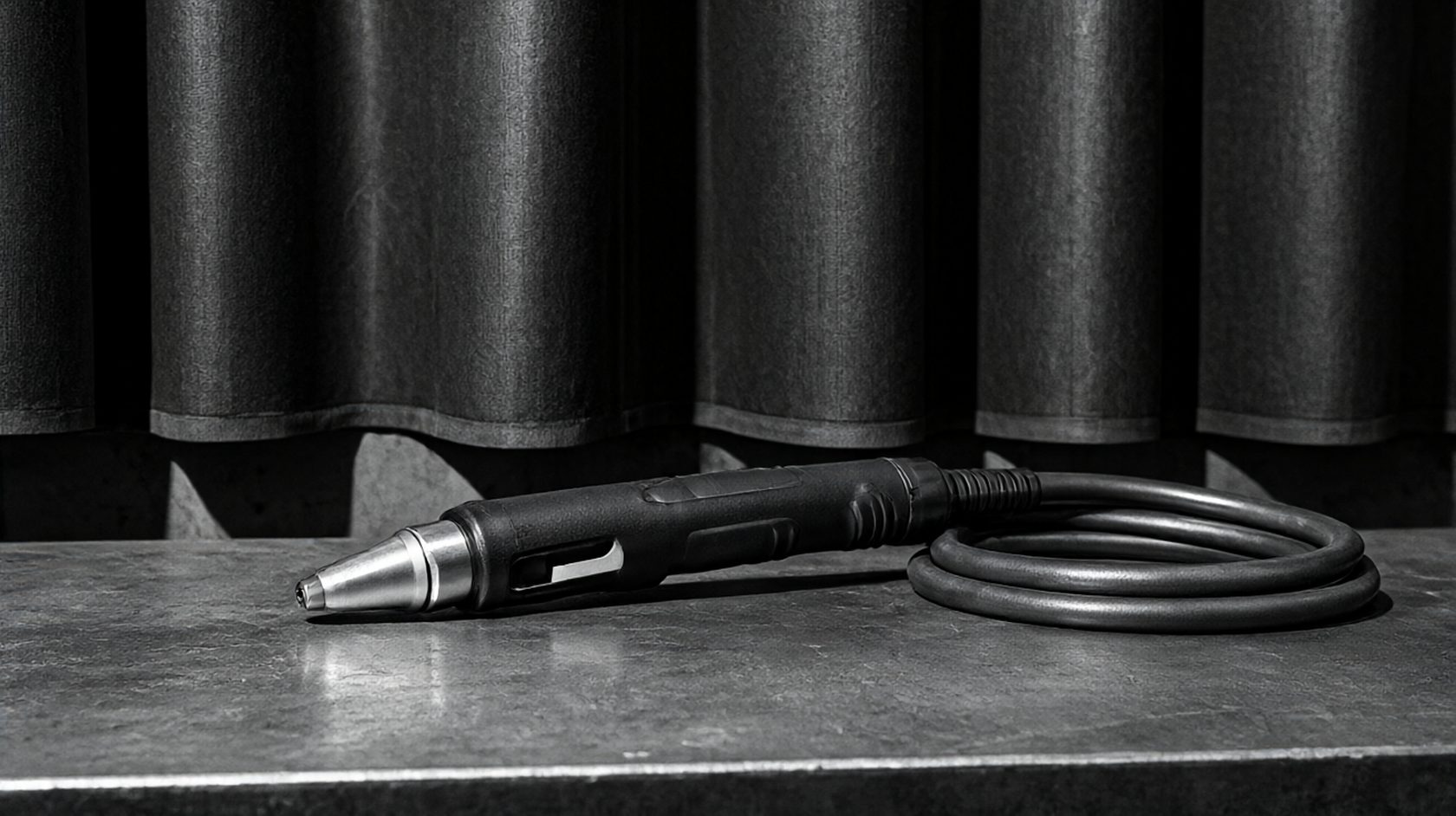
The water cooled handheld fiber laser welding machine described in this note is the case where the water circuit changes the weight and the reach, and the trial's end of shift measurement is what reveals it.
A tool accepted on the five can be handed to a shift. A tool accepted on a demonstration can be handed to a complaint, and the complaint will arrive in the third week.
The tool where the water circuit changes the weight and the reach is the water cooled handheld fiber laser welding machine described in this note, and the end of shift trial is what reveals it.
- Design the trial around the buyer's difficult positions rather than the seller's favourite joint.
- Use production parts with the worst fit up the upstream process permits.
- Run the trial for an hour and measure welds at the end of it.
- Use the buyer's own operator rather than the seller's demonstrator.
- Check the duty cycle against the power actually used in production.
- Count the leads on the operator's hand: fibre, wire and water hose.
- Issue a parameter card with locked values and a stated permitted range.
- Name who may change parameters without a supervisor.
- Keep a qualification list with names rather than a trainee count.
- Confirm eye protection rating, protective curtain and the area rule for other occupants.
- State inspection intervals and replacement criteria for window, nozzle, liner and water.
- Deliver the handover pack both at the machine and in the file.